SVC 06 / MOUNT + BALANCE
Mount and balance in Montclair
Tires bought online, or a set of wheels that needs rubber? We mount them, balance them and put them on the car.
About mount and balance
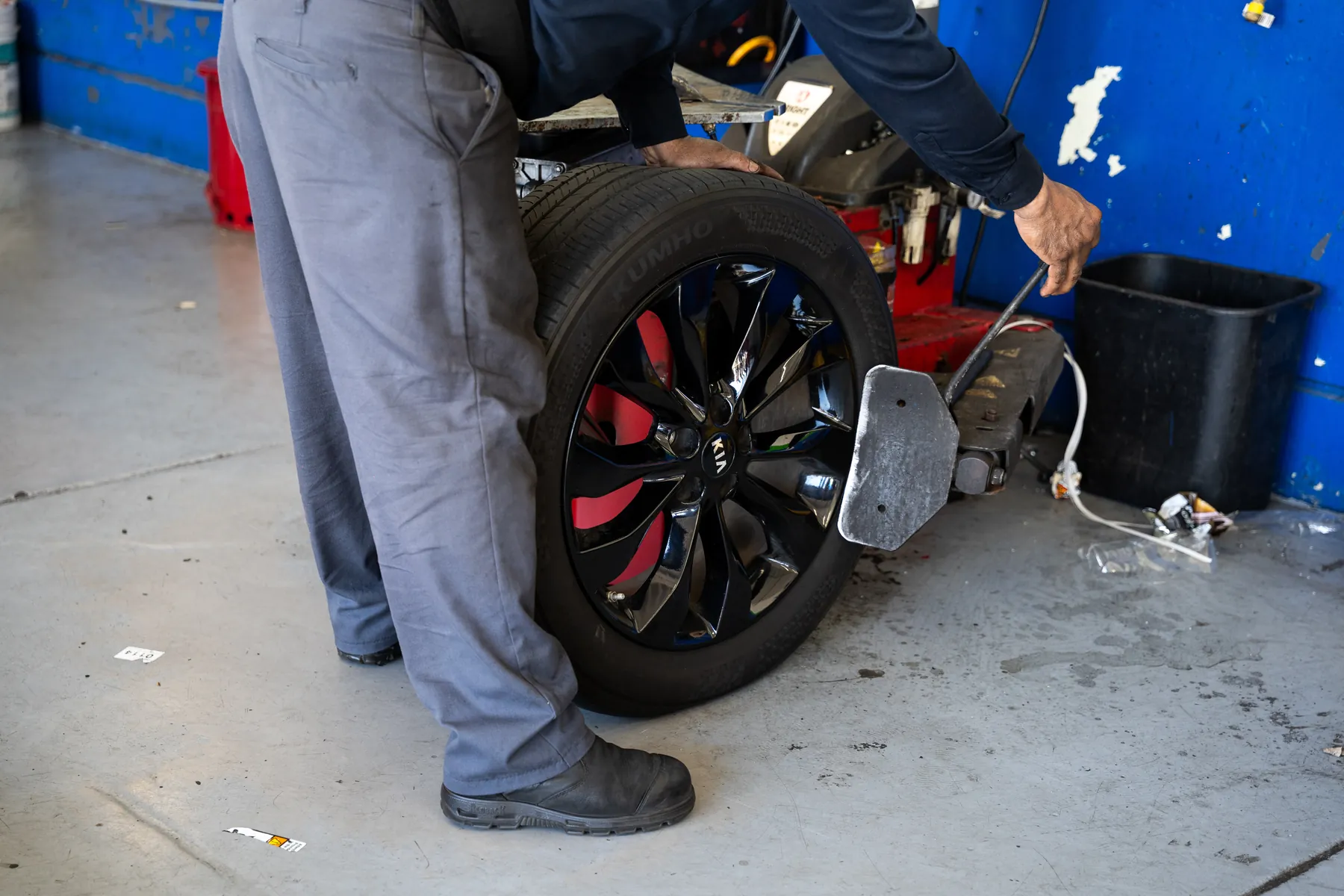
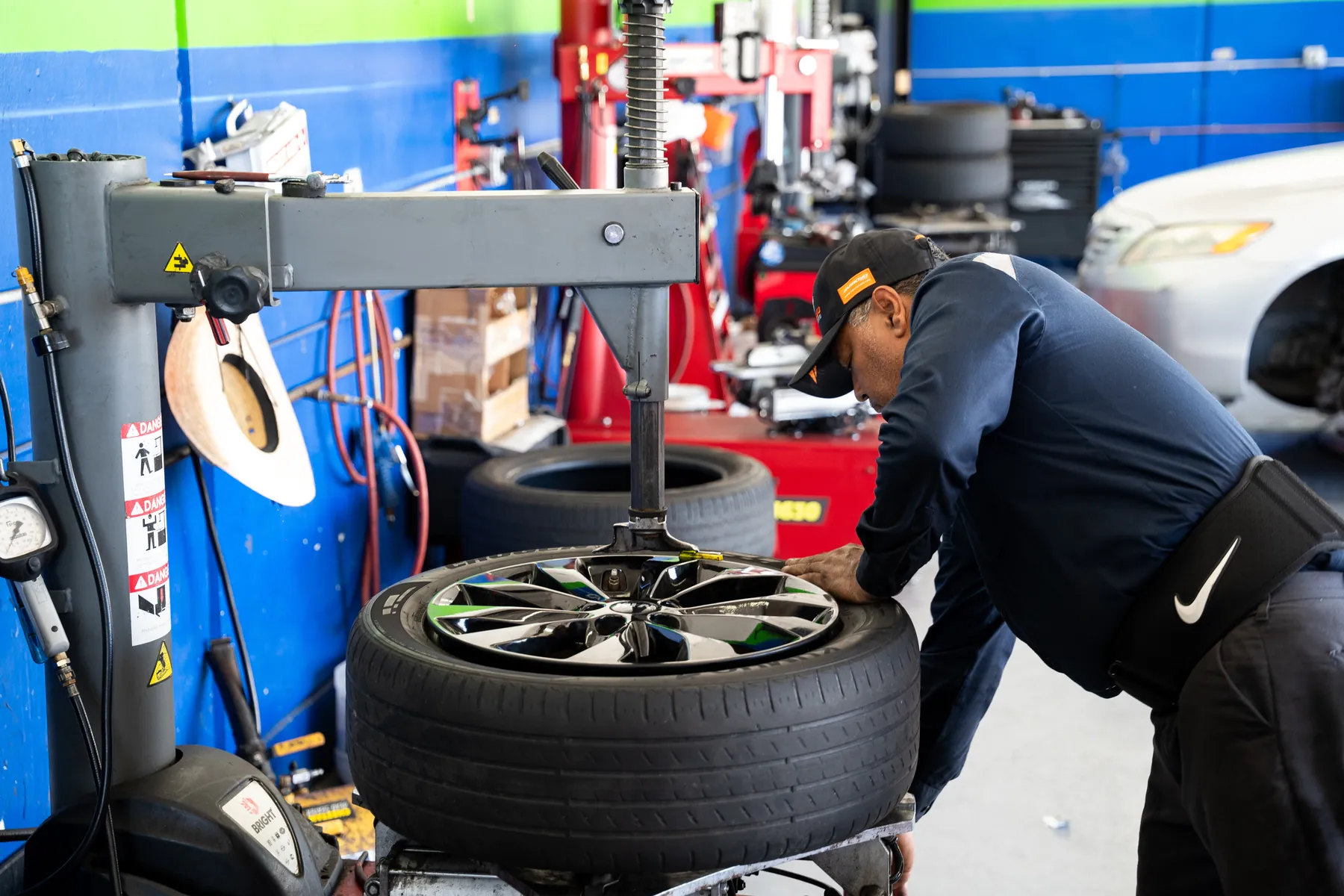
Mounting is getting the tire onto the wheel without hurting either one. That means a properly set up tire machine, lubricated beads and care around TPMS sensors and painted or machined lips.
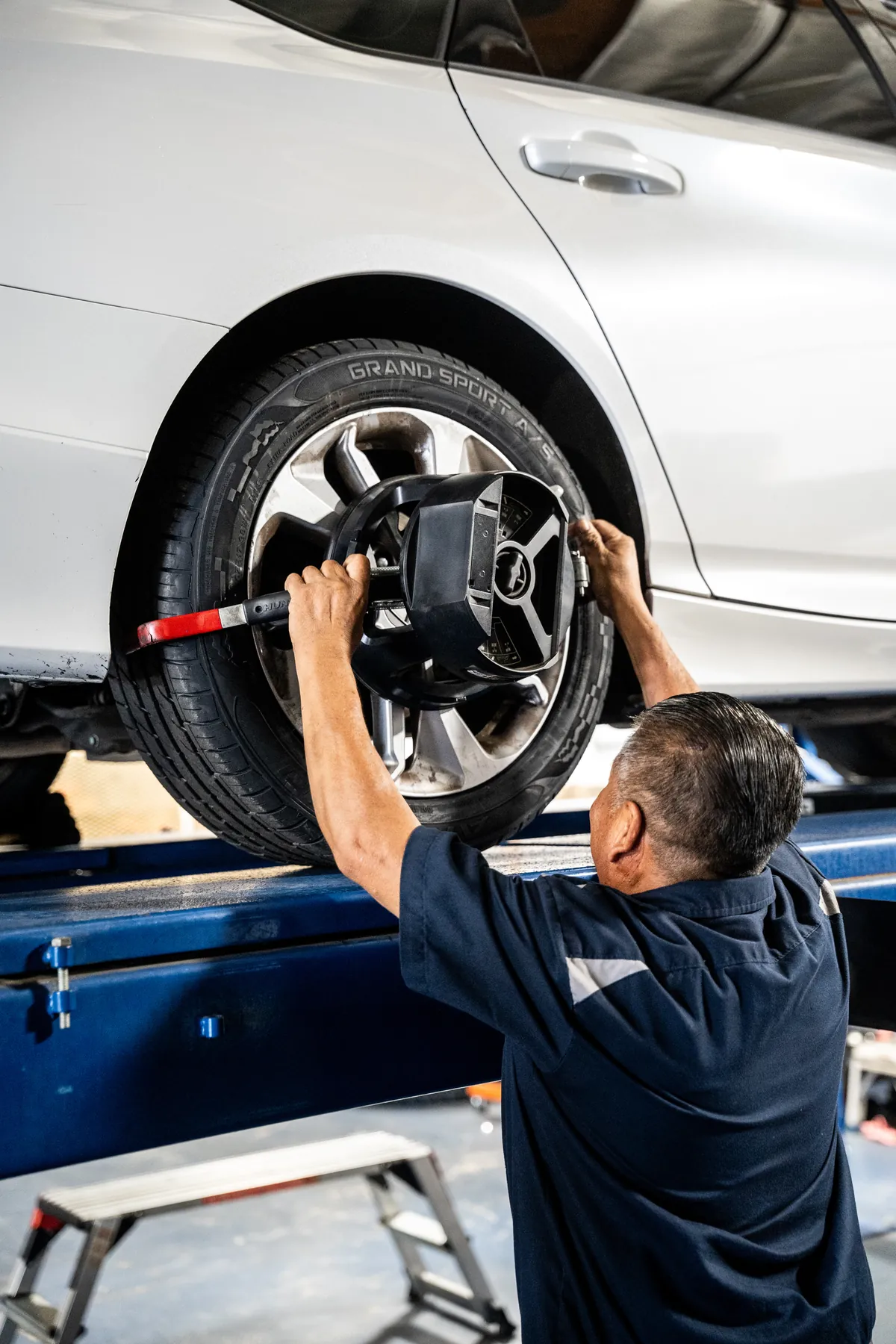
Balancing comes next. No tire and wheel weighs exactly the same all the way around. At 65 mph a heavy spot of less than an ounce turns into a shake you can feel in the steering wheel or the seat. The balancer spins the assembly, finds the heavy spot and tells us where to put counterweights.
If you're bringing tires you bought somewhere else, that's fine. Tell us the size and quantity when you book.
You need mount and balance when
- You bought tires online or from another seller
- You're moving tires onto new or different wheels
- You feel a vibration at highway speed that wasn't there before
- A wheel weight fell off (look for a clean rectangle on the rim)
- You're swapping a seasonal or off-road set
What happens in the bay
Dismount carefully
The old tire comes off without scratching the wheel or snapping the TPMS sensor.
Mount and seat
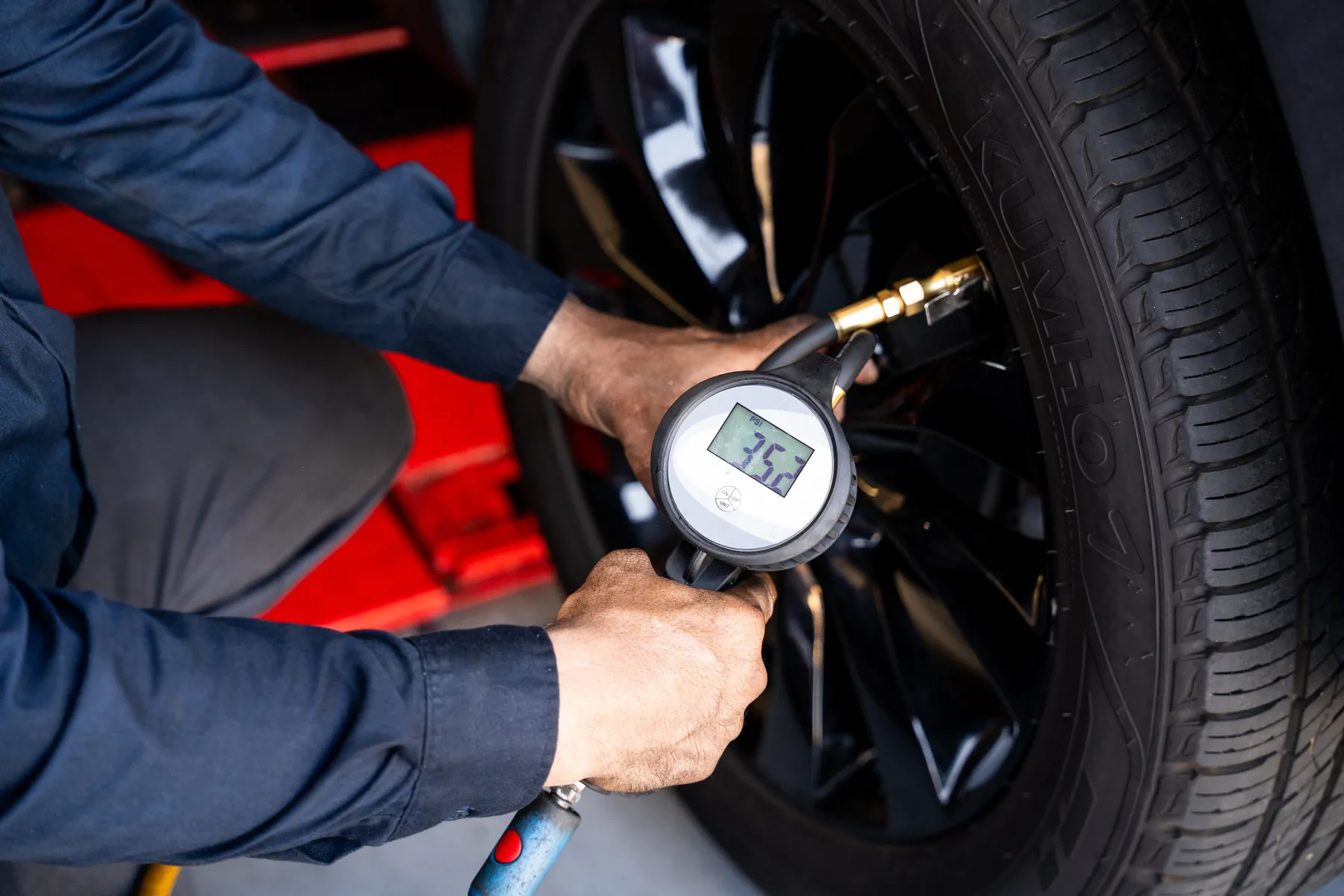
The new tire goes on, the bead seats evenly and it's inflated to the right pressure. Valve stems or TPMS service parts are replaced as needed.
Spin balance
Each assembly is balanced on the machine with clip-on or stick-on weights, depending on the wheel.
Install and torque
Wheels go back on and lug nuts are torqued to your vehicle's spec. Not hammered on with an impact gun at full power.
Still shaking after a balance?
Some vibrations come from the tire's stiffness, not its weight. That's what road force balancing is for.
What we torque to
Every vehicle maker publishes a lug nut torque spec for its wheels. That number, and not a feel or a habit, is what the wrench gets set to. Most passenger cars land somewhere between 80 and 100 lb-ft; many trucks and some European cars call for more. Yours is in the owner's manual, and it's the one we use.
Lug nuts go on in a star pattern so the wheel pulls down evenly against the hub. Too tight stretches the studs and can warp a brake rotor. Too loose and the wheel works itself free. Neither shows up until later, which is why the final pass is done with a torque wrench, not an impact gun at full power.
Aftermarket wheels sometimes need a different lug nut seat or a different spec than the factory wheels. If you're bringing your own, tell us what they are when you book.
Where the number comes from
- Your vehicle maker's spec, by year, make and model
- The wheel maker's spec for aftermarket wheels
- Set on a torque wrench, in a star pattern
Good practice after any wheel comes off: recheck the lug nuts after the first 50 to 100 miles. Swing by, or call (909) 321-2191.
Book mount and balance in Montclair.
Book online in a minute, or call (909) 321-2191. 5483 Moreno Street, Montclair.
Mount and balance questions
Will you install tires I bought online?
Yes. Book mount and balance and tell us the tire size and how many you're bringing.
How often should tires be balanced?
Any time a tire is mounted or repaired, and whenever you feel a vibration that wasn't there before. Some drivers rebalance at every other rotation.
Can you mount tires on wheels I bring in loose?
Yes. Bring the wheels and tires together and we'll mount and balance them. If the wheels are going on your vehicle, we'll install them too.