GUIDE / Buying tires
How to read a tire size
Kwik Tire, Montclair · Updated · 6 min read
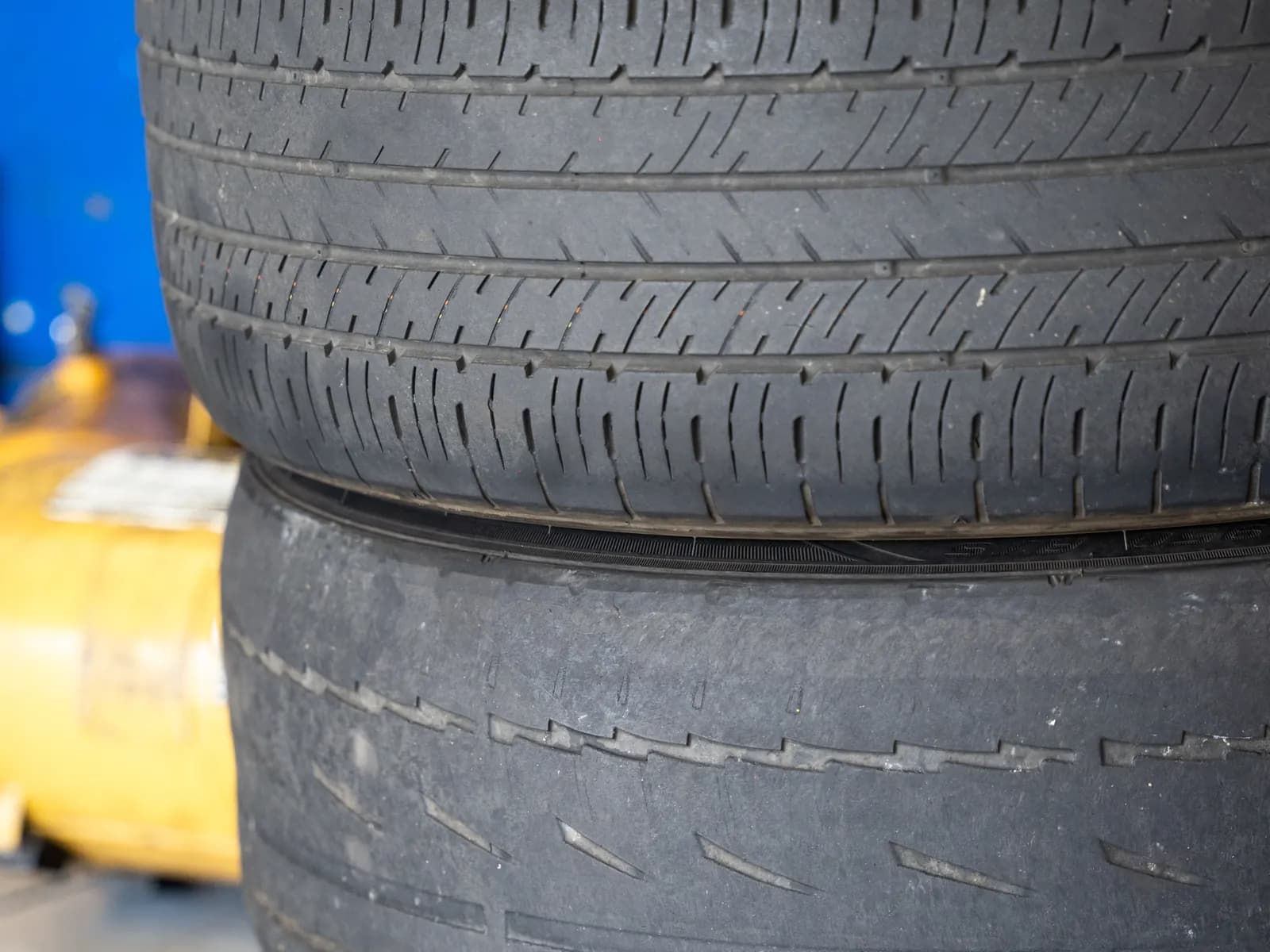
A size like 225/65R17 102H means a tire 225 millimeters wide with a sidewall 65 percent as tall as that width, radial construction, a 17-inch wheel, a load index of 102 and an H speed rating. The right size for your vehicle is on the tire placard inside the driver's door, not on whatever tires happen to be on the car now.
Every tire has its size molded into the sidewall in a string that looks like a part number. Something like 225/65R17 102H, a size you'll find on plenty of compact SUVs. Once you know what each piece means, you can check whether the tires on your car are right, compare quotes on equal terms, and avoid buying something that fits the wheel but not the vehicle.
Start with the door, not the tire
Open the driver's door and look at the edge of the door or the post it closes against. There's a tire information placard there. On some vehicles it's on the glove box door or inside the fuel door instead. It lists the size the vehicle maker fitted at the factory, the spare size, and the cold inflation pressure for the front and rear tires.
That placard is the reference. The tires on your car right now might not match it. A previous owner may have put on a different size, or a shop may have installed whatever was in stock. If the sidewall and the placard disagree, go by the placard until someone who knows fitment says otherwise. The owner's manual usually repeats the same information and may list approved optional sizes.
The size, one piece at a time
| Marking | What it means |
|---|---|
| P | P-metric passenger tire. LT means light truck. No letter usually means a metric passenger size. |
| 225 | Section width in millimeters, sidewall to sidewall. About 8.9 inches. |
| 65 | Aspect ratio. The sidewall is 65 percent as tall as the tire is wide. |
| R | Radial construction. |
| 17 | Fits a 17-inch wheel. |
| 102 | Load index. 102 means 1,874 pounds per tire. |
| H | Speed rating. H is 130 mph. |
The letter in front
P means the tire was built to the P-metric passenger standard. LT means light truck: a tire made to carry heavier loads at higher pressures, common on heavier pickups, vans and trucks that tow. Plenty of pickups and SUVs leave the factory on P-metric or metric passenger tires, so don't assume a truck needs LT. The placard says which one yours takes.
One rule doesn't bend. Don't mix passenger tires and LT tires on the same vehicle. They're built differently and carry load differently.
Width and aspect ratio
The 225 is the width in millimeters. The 65 is a percentage, not a measurement. On a 225/65, the sidewall is 65 percent of 225, or roughly 146 millimeters tall. A little under 6 inches. Aspect ratios typically run from 30 to 80. A lower number means a shorter sidewall, which usually goes with a bigger wheel, quicker steering and a firmer ride. A higher number means more rubber between your wheel and the pothole.
R and the wheel size
The R means radial, and nearly every car and light truck tire sold today is radial. The 17 is the diameter of the wheel the tire mounts on, in inches. It isn't the height of the tire. A 225/65R17 and a 265/70R17 both fit a 17-inch wheel, and they're very different tires.
Load index and speed rating
The characters after the size are called the service description. On our example it's 102H.
Load index
The load index is a code for how much weight one tire can carry at its maximum inflation. Load index 102 works out to 1,874 pounds per tire, so a set of four is rated for 7,496 pounds. Most passenger tires fall somewhere between 75 and 100. Higher numbers carry more.
Replacement tires shouldn't have less load capacity than the originals at the pressure on your placard. A lower load index on a loaded-up SUV or minivan means tires working harder and building more heat than they were designed for. Heat is what breaks tires down.
Speed rating
The letter is the maximum speed the tire is rated for in standardized lab testing. The common ones:
| Rating | Max speed |
|---|---|
| S | 112 mph |
| T | 118 mph |
| H | 130 mph |
| V | 149 mph |
| W | 168 mph |
| Y | 186 mph |
If your placard or owner's manual calls for a speed-rated tire, replacements should match it or go higher. Go lower and the vehicle's speed has to be limited to the new tire's rating, and handling can change. Dedicated winter tires are the usual exception, since a lower speed rating is generally accepted on them. Nobody is suggesting you drive 130 on the 10. The rating matters because the vehicle maker built the car around a certain kind of tire.
Light truck sizes read a little differently
An LT size looks like this: LT245/75R16 120/116Q Load Range E. The two load numbers are for single and dual fitments, since some trucks run two tires side by side on the rear axle. The load range letter tells you the tire's load and inflation limits. If you tow or haul, the load range matters as much as the size.
The DOT code tells you the tire's age
Look for the letters DOT followed by a string of letters and numbers. That's the tire identification number. On any tire made since 2000, the last four digits are the week and year it was built. A code ending in 3520 means the 35th week of 2020.
The full code isn't always on both sides. If you only see part of it, check the other sidewall, which may be the one facing the car. That number matters for recalls too. Tire makers use it to identify affected tires, and you need it to register a new set.
Age matters as much as tread. For how old is too old, read when to replace your tires.
Other marks on the sidewall
- Max pressure. The pressure molded on the sidewall is the most the tire is allowed to hold. It isn't the pressure for your car. Use the placard.
- M+S. Mud and snow. Common on all-season tires, and it means limited mud and snow capability.
- Mountain and snowflake symbol. A tire that meets the industry definition for use in severe snow. That's a real winter tire.
- Treadwear, traction, temperature. The UTQG grades. A treadwear grade of 600 wore twice as well on the government test course as a 300. Traction runs AA, A, B, C, based on straight-line braking on wet pavement. Temperature runs A, B, C.
When your tires don't match the door
Bigger wheels, lifted trucks and plus-sized fitments are all possible. Picking a size other than the factory one is real fitment work, though. Overall diameter, load capacity, clearance at full steering lock and speedometer reading all change. If you're looking at new wheels, start at our wheels page and we'll talk through what fits.
Ready to shop? Grab the size off your door placard and search it on our tire page, or call (909) 321-2191 with your year, make and model. Not sure what's on the car now or how old it is? Book a tire inspection at our Montclair shop and we'll read every sidewall, check the dates and tell you where you stand. Bought tires online? Book mount and balance and bring them in.
Want a second set of eyes? Book tire inspection.
Book online in a minute, or call (909) 321-2191. 5483 Moreno Street, Montclair.
More questions
Can I put a different size tire on my car?
Sometimes, if the vehicle maker or tire maker approves the size and its load capacity is at least what the original carried. A size change affects clearance, speedometer reading and handling, so have the fitment checked first.
What is the difference between a 102H and a 102V tire?
Both carry 1,874 pounds per tire. The V is rated to 149 mph and the H to 130 mph, so a V can replace an H, but an H shouldn't replace a V if your placard calls for V.
Why does my pickup have P-metric tires instead of LT?
Many pickups and SUVs come from the factory on passenger tires. Stick with what the placard specifies unless you tow or haul enough to need an LT tire, and never mix the two types on one vehicle.
How do I find out how old my tires are?
Find the DOT code on the sidewall and read the last four digits. The first two are the week and the last two are the year, so 1123 means the 11th week of 2023.
Keep reading
5 MIN / Buying tires
Used take-off tires: what to check before you buy
What take-off tires are, how to check a used tire's age, tread, repairs and damage, matching it across an axle, and when buying new makes more sense.
6 MIN / Buying tires
Choosing tires for Southern California driving
All-season, highway, all-terrain, performance or winter: matching tire type to Inland Empire commutes, summer heat, rare but slick rain and mountain trips.
5 MIN / Buying tires
Buying new tires: what to expect at the shop
What a proper new tire install includes: sizing, TPMS service, mounting, balancing, torque, pressures, the alignment check and the 500-mile break-in.