
GUIDE / Tire care
When to replace your tires
Kwik Tire, Montclair · Updated · 5 min read
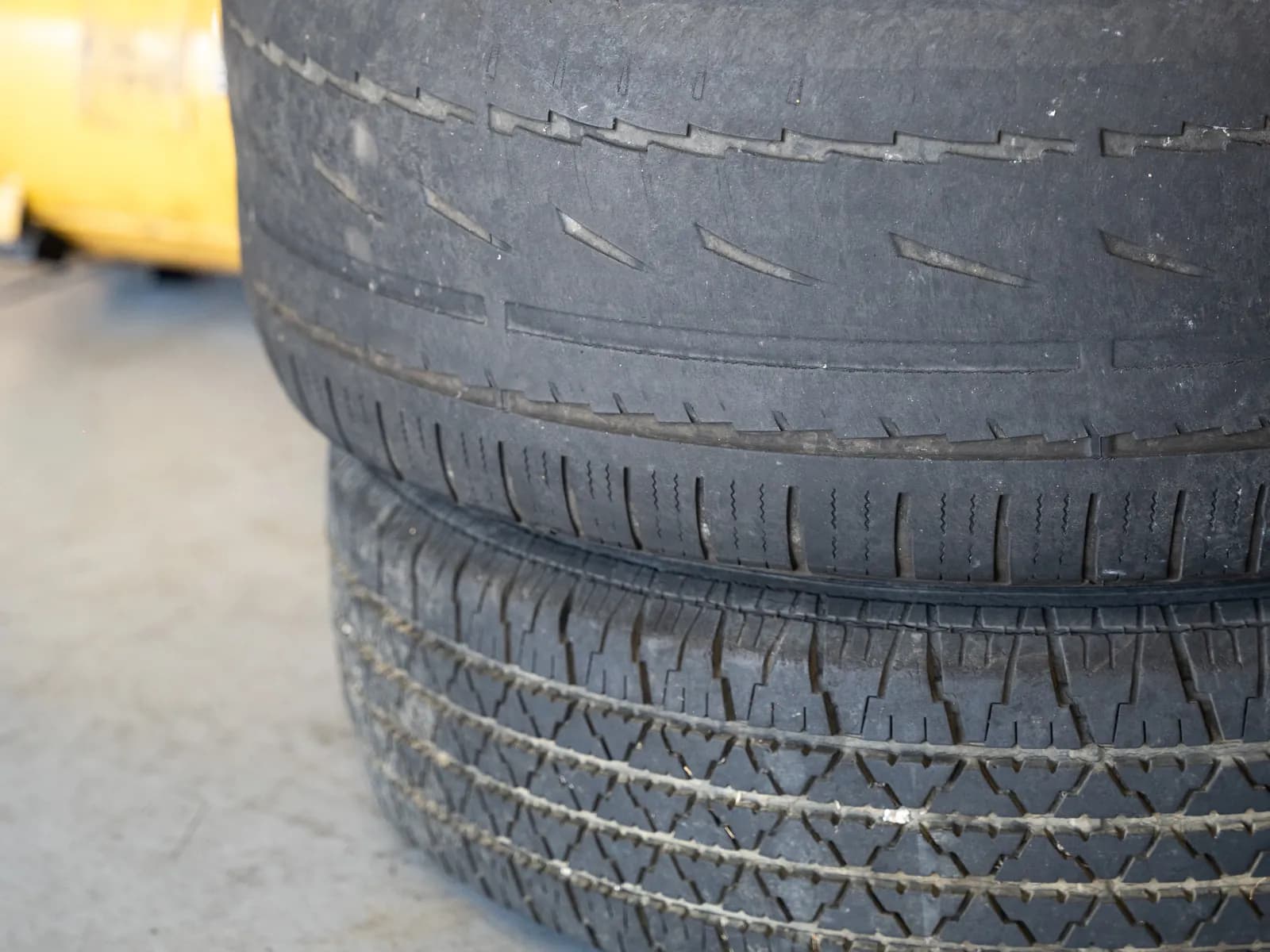
Replace a tire when its tread reaches 2/32 of an inch anywhere, when it has sidewall damage like a bulge or deep cut, or when it ages out, which Michelin puts at ten years from manufacture at the latest. Start shopping around 4/32, because wet-road grip drops off well before the wear bars show.
Tires don't come with a dashboard warning that says "replace me." You have to read them. Three things decide it: how much tread is left, how old the rubber is, and whether anything has damaged the tire. Any one of the three can end a tire's life, even when the other two look fine.
Tread depth is measured in 32nds
In the U.S., tread depth is measured in 32nds of an inch. A new all-season passenger tire typically starts somewhere around 9/32 to 11/32. Truck and all-terrain tires often start deeper.
The line everyone agrees on is 2/32. Molded into the grooves of every tire are wear bars, narrow strips of smooth rubber running across the tread. When the tread wears down flush with those bars, the tire is worn out. The tire industry's guidance is to replace at 2/32 remaining anywhere on the tread, not on average. A tire that's 6/32 on the outside edge and 2/32 on the inside edge is done.
The penny and the quarter
No gauge? Use change.
- Penny test (2/32). Put a penny upside down into a tread groove. If part of Lincoln's head is covered by the tread, you're above the minimum. If you can see all of his head, the tire is worn out.
- Quarter test (4/32). Same idea with a quarter, Washington's head down. If the tread reaches the top of his head, you've got about 4/32 left. That's where Consumer Reports says to start shopping.
Check several grooves on each tire: inside, center and outside. Uneven readings are a separate problem, covered in our guide to uneven tire wear.
Why 4/32 matters on wet roads
Deep tread does one job a worn tire can't. It moves water out of the way. As the grooves get shallower there's less room for that water, and the tire is quicker to ride up on a film of it. That's hydroplaning. Consumer Reports' tire program tells drivers to begin shopping by 4/32 and replace tires before braking and wet-weather traction degrade significantly.
Inland Empire drivers get lulled by this. It barely rains here from May through October, so a tire at 3/32 feels fine for months. Then the first storm of the season puts water on roads coated with months of oil, and that same tire behaves like a different tire.
Age: when good tread isn't enough
Rubber changes over time whether you drive on it or not. Heat, storage conditions, load, speed and pressure all play a part. A tire can have plenty of tread and still be too old to trust.
There's no single industry expiration date. The U.S. Tire Manufacturers Association says it isn't aware of scientific data that sets a specific minimum or maximum service life for passenger tires, and that age is one factor among several. Individual tire and vehicle makers do give guidance, though. Michelin's is clear:
- After five years in service, have the tires inspected by a tire professional at least once a year.
- Replace tires ten years after the date of manufacture, no matter how much tread they have. That includes the spare.
Your owner's manual may say something stricter. Follow whichever applies to your vehicle. To find the date, read the last four digits of the DOT code on the sidewall. 2219 means the 22nd week of 2019. Our guide to reading a tire size shows where to look.
Damage that retires a tire early
Some tires end their life with plenty of tread left. Replace a tire, or have it looked at right away, if you see:
- A bulge or blister on the sidewall. That's broken cords inside, usually from a curb or pothole.
- Cuts or cracks deep enough to show cord or fabric.
- Heavy cracking on the sidewall or in the tread.
- A puncture in the sidewall or shoulder, or one bigger than 1/4 inch. See which flat tires can be repaired.
- An old repair that was done wrong, like a plug pushed in from the outside with no patch.
- Signs it was driven flat or very low, which can wreck the inside even when the outside looks normal.
Replacing two tires instead of four
Four at once is the ideal, and many vehicle makers recommend it. Budgets don't always cooperate. If you're replacing a pair in the same size and construction as the others, the industry guidance is to put the two new tires on the rear axle. That surprises people with front-wheel-drive cars. The reason is wet-road stability. Deeper tread in back keeps the rear from losing grip first, which is how a car spins.
Replacing just one? Pair it with the tire that has the most tread left and put both on the rear.
All-wheel drive is stricter
On AWD and 4WD vehicles, all four tires are tied together through the drivetrain. A new tire is taller than a worn one, so it turns at a slightly different speed, and the drivetrain has to make up the difference. USTMA warns that even small differences in outside diameter can cause drivetrain damage on these vehicles. Unless the owner's manual says otherwise, keep all four the same size and don't mix tread types, like all-terrains on one axle and all-seasons on the other.
Check the manual before replacing fewer than four on an AWD vehicle. If one tire on a newer set gets ruined, a used take-off with similar tread can sometimes fill the gap. Our guide to used take-off tires covers how to judge one.
Making a set last longer
Three habits buy you miles. Keep pressures at the door-placard number. Rotate on schedule. Fix alignment problems before they chew up a set. Rotation matters most on front-wheel-drive cars, where the front tires steer, carry more of the load and do most of the braking. Skip it and the fronts are finished while the rears still look new.
Not sure where your tires stand? Book a tire inspection at our Montclair shop. We measure tread at several points on every tire, read the DOT dates and check the sidewalls, then tell you what's urgent and what can wait. If it's time, you can shop sizes on our tire page before you come in.
Want a second set of eyes? Book tire inspection.
Book online in a minute, or call (909) 321-2191. 5483 Moreno Street, Montclair.
More questions
Should I replace tires that are old but still have lots of tread?
If they're more than ten years past the DOT date, Michelin says yes, regardless of tread. Between five and ten years, have them inspected every year and replace them sooner if you see cracking, bulges or other damage.
Can I replace just one tire?
Sometimes, if the others still have plenty of tread and the vehicle isn't sensitive to diameter differences. Pair the new tire with the deepest remaining tire on the rear axle, and check the owner's manual first on AWD and 4WD vehicles.
Why do new tires go on the back of a front-wheel-drive car?
The rear needs grip on wet roads to keep the car from spinning. Worn tires in back can let the rear slide before the front does, and that's much harder to catch.
How often should I check my tread depth?
Once a month, when you check pressures. It takes a minute with a penny, a quarter or an inexpensive tread gauge.
Keep reading
5 MIN / Tire care
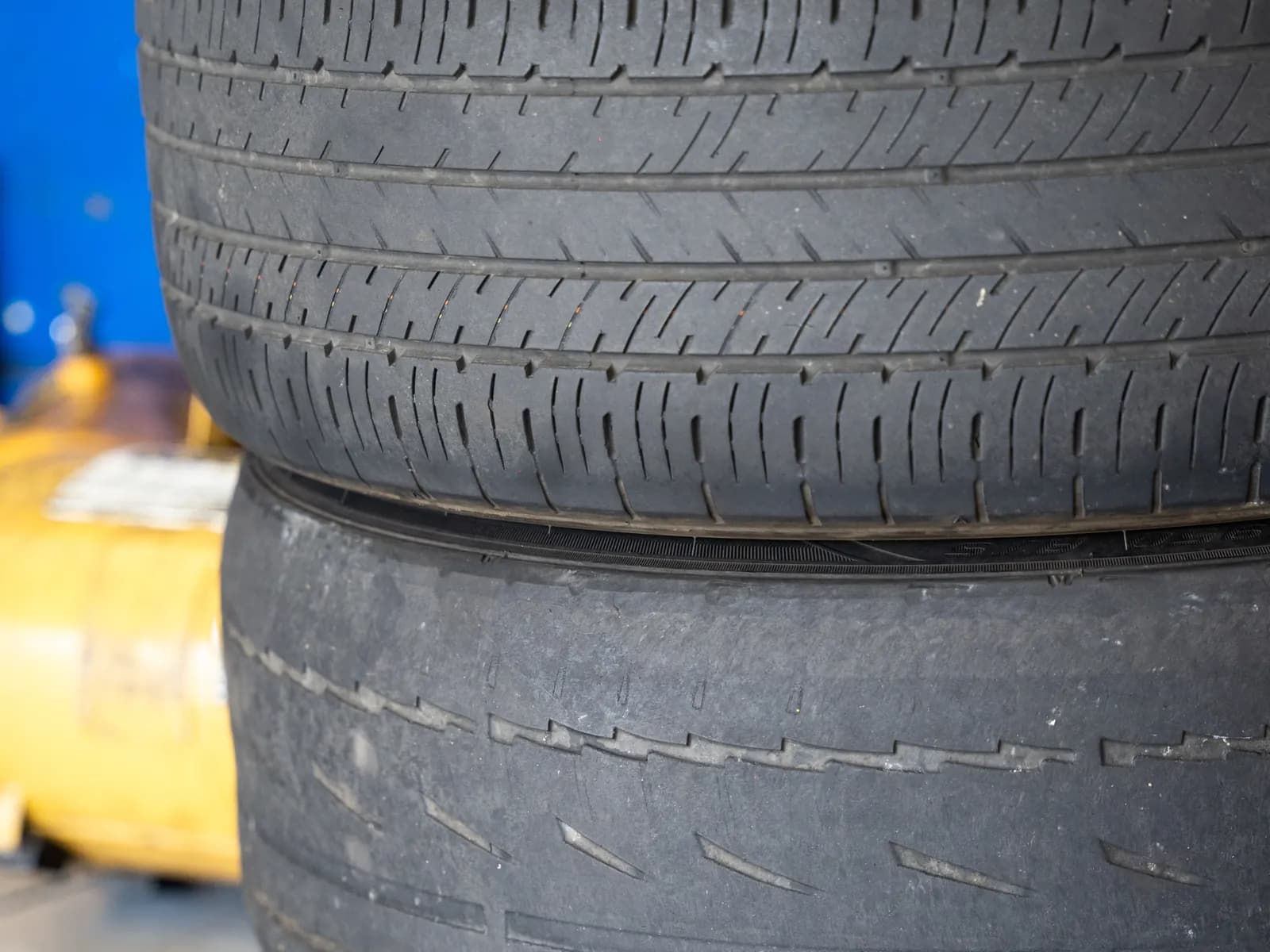
Uneven tire wear: what the pattern tells you
Center wear, edge wear, one-sided wear, feathering and cupping each point to a cause. How to read your tires, and what to fix before you replace them.
5 MIN / Tire care
Tire pressure in Inland Empire heat
Summer heat and Santa Ana swings move tire pressure several psi a day. Where to find the right number, when to check it, and why you never bleed a hot tire.
6 MIN / Buying tires
How to read a tire size
What every part of a tire size like 225/65R17 102H means: width, aspect ratio, wheel size, load index, speed rating and the DOT date code.