
GUIDE / Tire care
Tire pressure in Inland Empire heat
Kwik Tire, Montclair · Updated · 5 min read
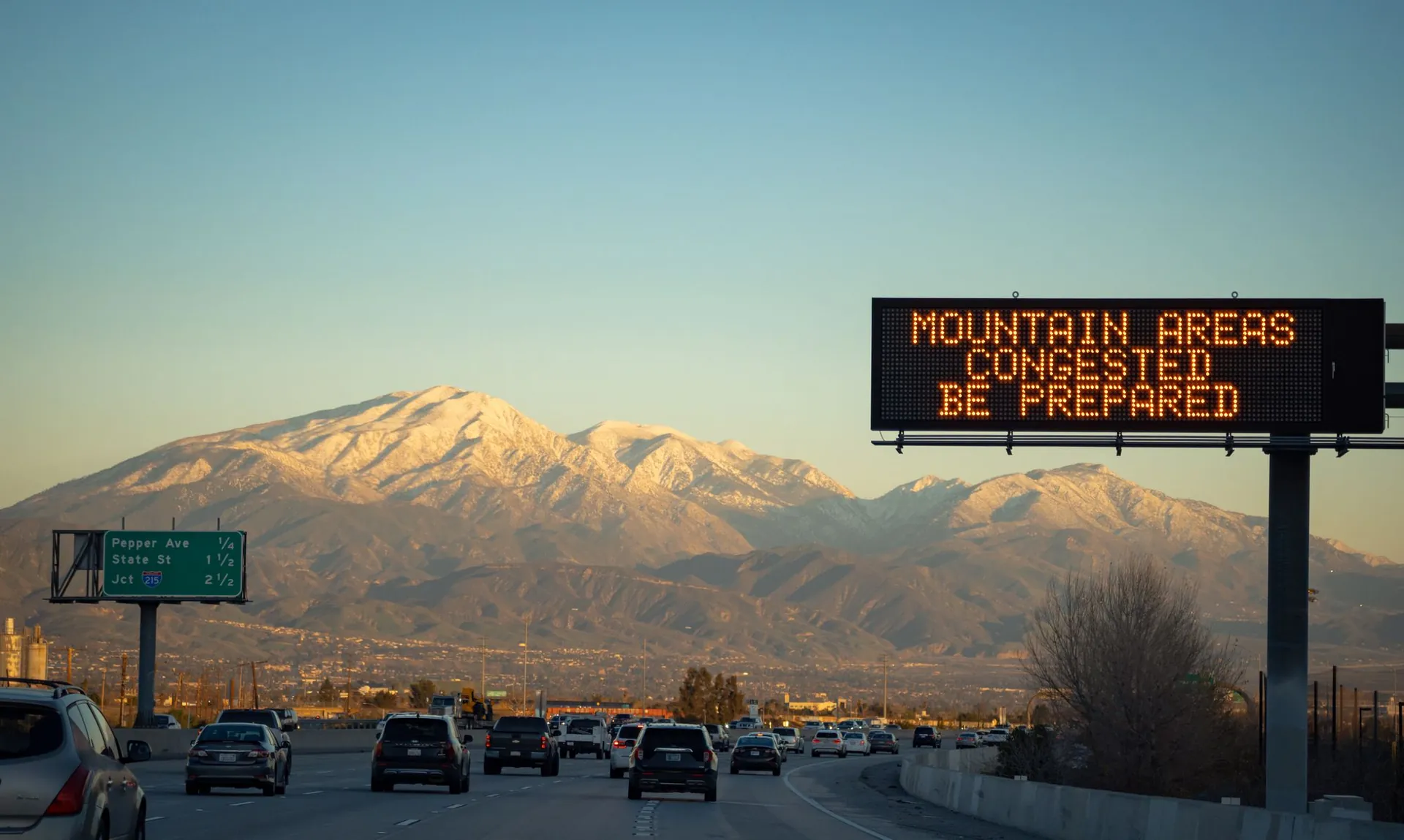
Set your tires to the pressure on the driver's door placard, measured cold, before the day or the drive heats them up. Inland Empire summer days average about 30 degrees warmer than the nights, which moves tire pressure several psi on its own, so a high reading after a drive is normal and should never be bled down.
Summer in the Inland Empire is hard on tires. Long runs on the 10 and the 15, afternoons in the 90s, black asphalt, and cars loaded up for a weekend away. Underinflation causes excessive heat inside a tire, and heat is what breaks tires down from the inside. Pressure is the cheapest thing you can control.
The right number is on the door
Open the driver's door and find the tire placard on the door edge or the post. It lists the cold inflation pressure for the front and rear tires, and they aren't always the same. That's the number your vehicle maker chose for the car's weight, handling and braking.
The number molded into the tire's sidewall is something else: the maximum pressure that tire is allowed to hold, on any vehicle. Filling to it overinflates the tire on most cars. The center of the tread wears early, the ride gets harsh, and an overinflated tire is more likely to be cut, punctured or broken by a hard pothole hit.
Check it cold
Cold doesn't mean cold weather. It means the tire hasn't been driven yet. The industry definition: the vehicle has been parked for at least three hours, or driven less than a mile at moderate speed. Driving heats the air inside, so a tire you just drove on reads higher than its cold pressure.
In practice, check first thing in the morning, in your driveway, before the commute. Keep your own gauge in the car. USTMA recommends it, and you'll get readings you can compare month to month.
How much heat changes pressure
Tire pressure moves about 1 to 2 psi for every 10 degree change in temperature. Here's what that looks like locally. At the Pomona Fairplex weather station, a few miles west of Montclair, the long-term average July day runs from about 58°F overnight to 91°F in the afternoon. That's a 33 degree swing, roughly 3 to 6 psi between the same tire at dawn and at 3 p.m.
Then add driving. Heat from the road and from the tire flexing pushes the reading higher still. That's normal. It's also why the placard gives a cold number: it's the only fair point of comparison.
Never bleed a hot tire
This is the mistake heat causes. You check your tires at a gas station after 40 minutes on the 10, see 39 psi on a tire that should be 35, and let some air out. Once it cools, that tire is underinflated, and you won't know until the next morning or the next TPMS light.
USTMA's rule is plain: never bleed or reduce pressure when tires are hot from driving. There's a flip side too. If a hot tire reads at or below its cold spec, it may be dangerously underinflated. Find out why, or have it checked.
Why low pressure is worse in summer
An underinflated tire flexes more, and more flex means more internal heat. The tire industry specifically warns that underinflation gets more dangerous at high speeds, with heavy loads, over long distances and in high outside temperatures. A loaded SUV on the 15 toward Las Vegas in July checks every one of those boxes in a single trip.
Damage from running low doesn't always show, and it can lead to a failure later, even after the pressure is corrected. Your TPMS light won't help much here, because the federal standard lets it wait until a tire is 25 percent low. More on that in what the TPMS light means.
Santa Ana season and winter mornings
The other local pressure swing comes in the cooler months. The National Weather Service describes Santa Ana winds as dry air from high pressure over the desert Southwest, warming as it's compressed coming down through the mountain passes. They're most common from September through May. When the weather flips between a warm Santa Ana stretch and a cool spell, your tire pressure follows the temperature.
Even on calm days, December in this valley averages highs in the mid 60s and lows in the upper 30s. Tires set on a warm afternoon can read a few psi low by sunrise, sometimes enough to trigger the TPMS light. That isn't a sensor failure. Top them off cold.
A monthly routine that takes five minutes
- Pick a morning before you've driven.
- Check all four tires and the spare with your gauge. A compact T-type spare takes 60 psi.
- Fill to the door placard number. Fronts and rears may differ.
- Look over the tread and sidewalls while you're down there: nails, bulges, cracking, uneven wear.
- Write the numbers down. Tires lose 1 to 2 psi a month normally. One that keeps losing more than 2 psi a month has a leak.
Check before road trips, before towing, and before loading the car up, too.
About nitrogen
Some shops push nitrogen fills. USTMA says nitrogen isn't necessary for normal tire service, though it's permissible and may slightly reduce pressure loss. Air is already about 78 percent nitrogen. If your tires have nitrogen and you're low, add regular air. Mixing the two is fine.
Sun and parked cars
Sunlight and heat age rubber too. Extended exposure to sun and ozone causes weather checking, the fine cracks you see on sidewalls. Tires with severe cracking, or cracks that reach the cords, need to come off. If a vehicle sits for months, the tire industry recommends moving it every three months so the same section of tire isn't always carrying the load.
Not sure your gauge is telling the truth, or tired of a light that keeps coming back? Stop by Kwik Tire at 5483 Moreno Street in Montclair. Book a tire inspection and we'll check pressures, look for leaks, and read the tread and DOT dates on every tire. If a tire keeps losing air, flat tire repair finds the cause. If your TPMS light won't behave, book TPMS service.
Want a second set of eyes? Book tire inspection.
Book online in a minute, or call (909) 321-2191. 5483 Moreno Street, Montclair.
More questions
Should I lower my tire pressure in summer?
No. Set it to the door placard number measured cold, and leave the hot reading alone. Pressure rising above the cold spec while driving is normal.
How much does tire pressure go up while driving?
It varies with speed, load, sun and outside temperature, so there's no single number. A rise above the cold spec is expected, and a hot reading at or below the cold spec means the tire may be dangerously low.
Is it OK to inflate to the pressure on the tire sidewall?
No. The sidewall number is the tire's maximum, not the right pressure for your vehicle. Use the placard inside the driver's door.
How often should I check tire pressure in the Inland Empire?
At least once a month, plus before long trips, towing or carrying heavy loads. Big temperature changes, like the first heat wave of summer or a cold snap, are good times for an extra check.
Keep reading
5 MIN / Tire care
When to replace your tires
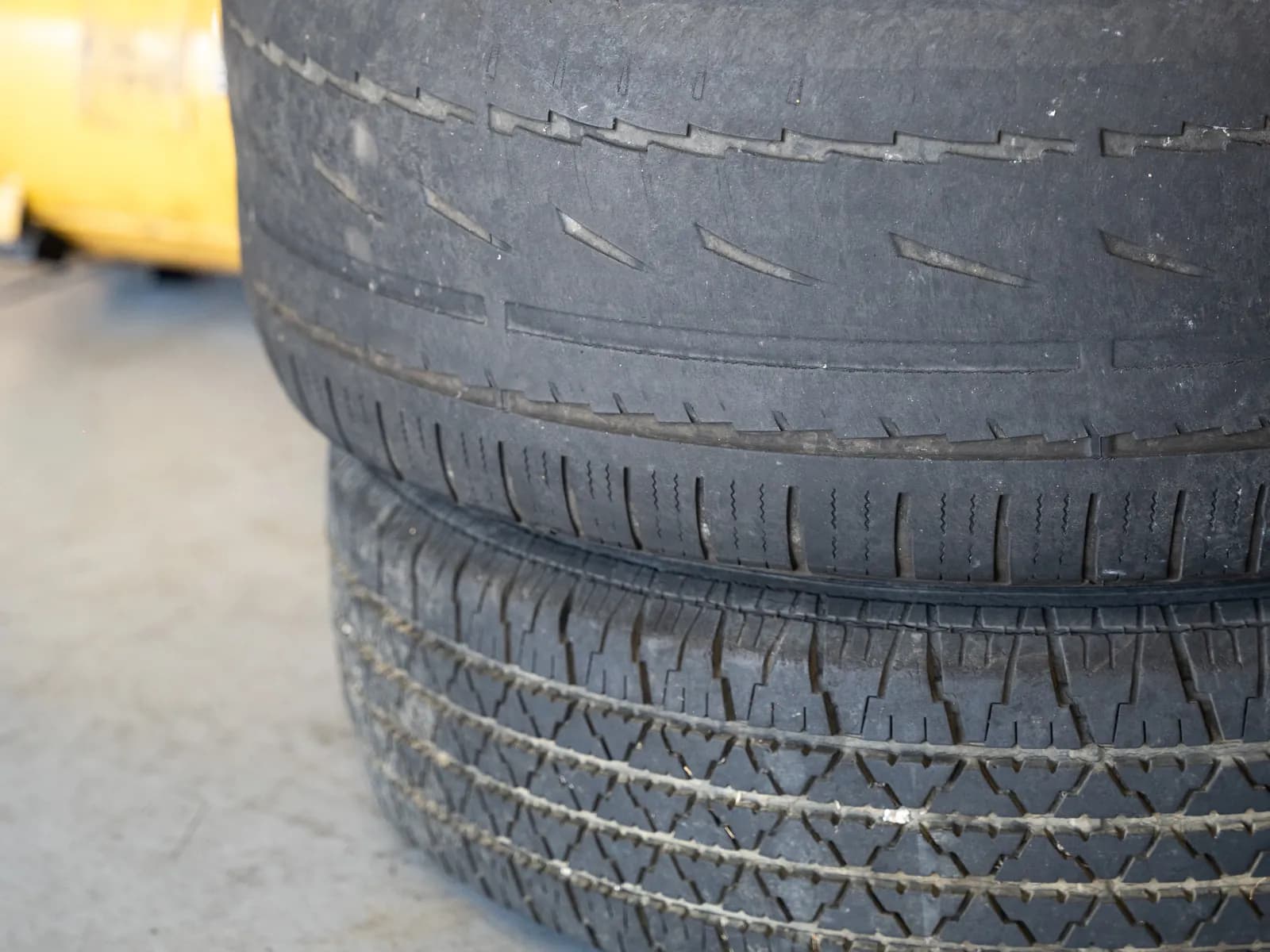
How to tell when tires are done: tread depth in 32nds, the penny and quarter tests, tire age, sidewall damage, and replacing two tires versus four.
5 MIN / Tire care
Uneven tire wear: what the pattern tells you
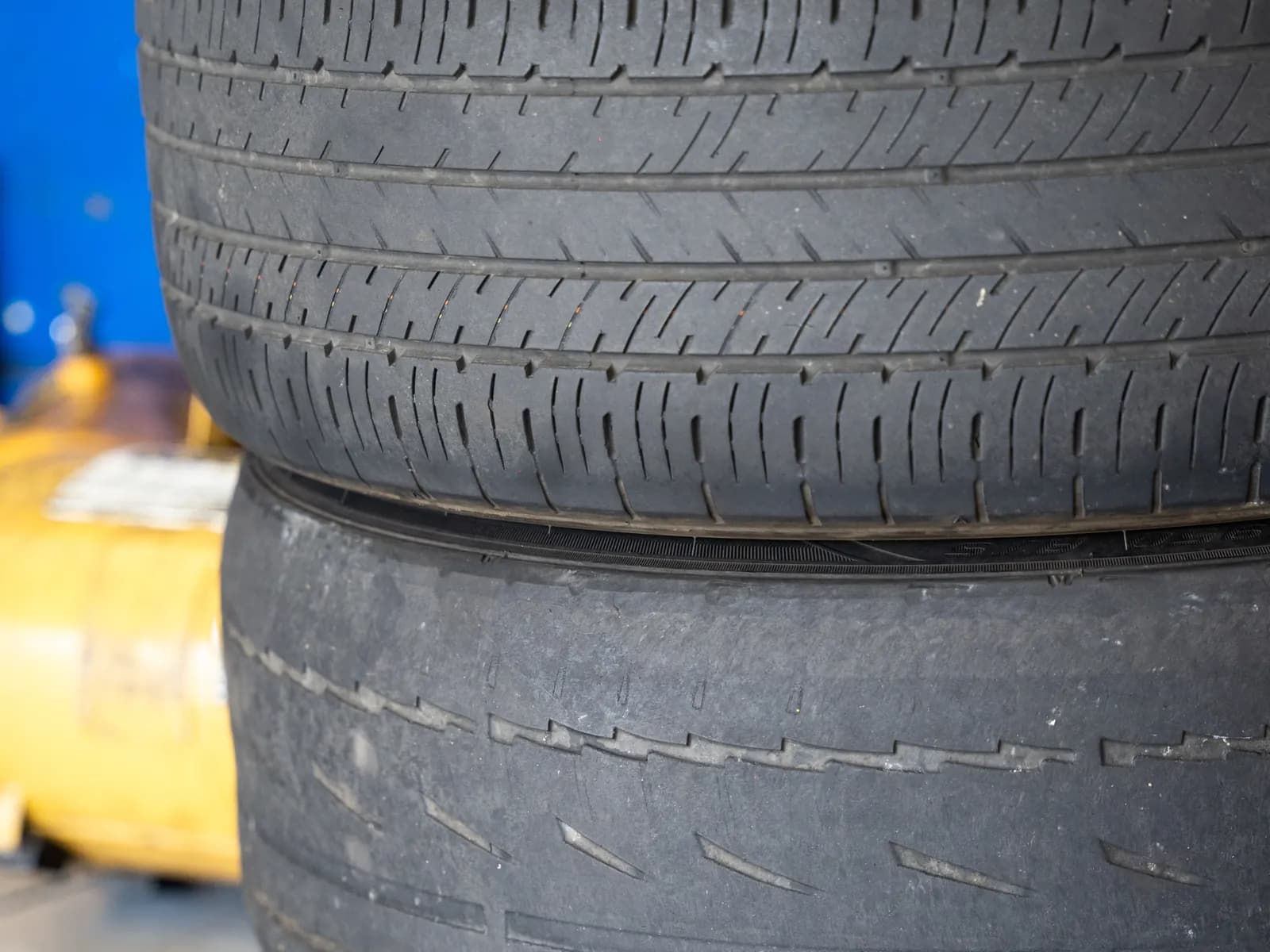
Center wear, edge wear, one-sided wear, feathering and cupping each point to a cause. How to read your tires, and what to fix before you replace them.
6 MIN / Buying tires
How to read a tire size
What every part of a tire size like 225/65R17 102H means: width, aspect ratio, wheel size, load index, speed rating and the DOT date code.