
GUIDE / Service explained
Which flat tires can be repaired
Kwik Tire, Montclair · Updated · 5 min read
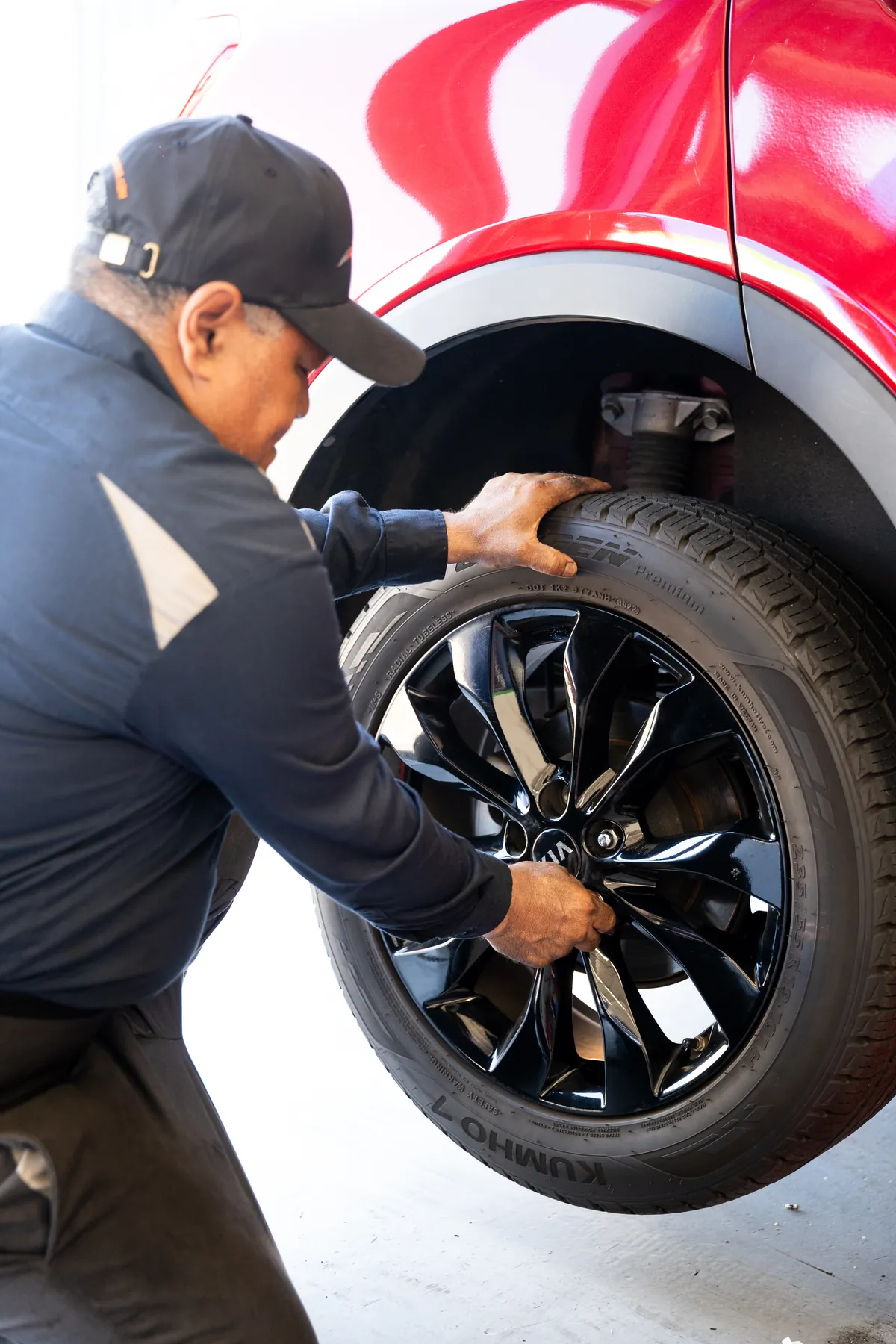
A puncture can usually be repaired if it's in the tread area, no more than 1/4 inch across, and the tire wasn't damaged inside by being driven low. Anything in the sidewall or shoulder, larger than 1/4 inch, or overlapping an earlier repair means the tire has to be replaced.
Picked up a screw? Whether it can be fixed comes down to three things: where the hole is, how big it is, and what happened to the tire after it went in. The tire industry publishes the rules. The U.S. Tire Manufacturers Association (USTMA) puts them in a wall chart called Puncture Repair Procedures for Passenger and Light Truck Tires. Here's what they say, in plain language.
The three rules for a repairable puncture
It has to be in the tread
Repairs are limited to the tread area, the part of the tire that meets the road. Not the sidewall. Not the shoulder, where the tread rounds over into the sidewall. Damage that runs into the shoulder or the belt edge, or angles into it, can't be repaired. If it isn't clear whether the hole reaches the shoulder, the tire comes out of service.
Why so strict? The sidewall and shoulder flex with every revolution, and a 225/65R17 turns roughly 700 times every mile. A patch in that zone gets worked back and forth constantly and won't hold.
It has to be 1/4 inch or smaller
The injury can't be more than 1/4 inch (6 mm) in diameter. Most nails and screws come in under that. A bolt, a large piece of metal or a cut usually doesn't.
The inside has to be intact
This is the one people don't expect. A tire driven even a short distance while badly underinflated can be damaged beyond repair. The sidewall flexes far more than it was built to, and the inner liner and body plies get ground up inside. From the outside the tire looks fine. Inside, it's finished. USTMA compares it to running an engine without enough oil: adding air back doesn't undo the damage, and the tire can still fail later.
That's why the tire has to come off the wheel for a full inspection of the inside before anyone decides it's repairable.
How a proper repair is done
- The tire comes off the wheel. No exceptions.
- The inside is inspected for liner damage, other punctures and old repairs.
- The injury is cleaned out and prepared.
- A rubber stem fills the hole, and a patch seals the inner liner. Often it's a single combination unit with both.
- The tire goes back on the wheel, gets balanced and is set to placard pressure.
USTMA is direct about what doesn't count. A plug alone isn't a proper repair. A patch alone isn't either. Never repair a tire while it's still on the wheel, and never do an outside-in repair. A tire that already has an improper repair in it should be scrapped, not repaired again.
A string plug from a roadside kit can get you to a shop, but it isn't a proper repair. Drive gently, get the tire looked at soon, and know that once it's off the wheel it may not qualify for a permanent repair.
When it can't be fixed
- A puncture in the sidewall or shoulder
- A hole larger than 1/4 inch, or a cut or tear
- An inner liner damaged by driving low or flat
- A repair that would overlap an existing repair
- An existing improper repair
- Bulges, blisters or exposed cord anywhere on the tire
Individual tire makers can add their own limits on top of USTMA's, based on things like speed rating, load index or run-flat construction. A shop should check the maker's repair policy for anything unusual.
Run-flat tires
Run-flats can keep rolling with no air for a limited distance. That's the point of them, and it complicates repair. Some tire makers set repair limits or restrictions on run-flats, so the maker's policy has to be checked before anyone repairs one. Whether the tire was driven while flat matters a lot, since that kind of internal damage can't be seen from outside. Run-flats also require a working TPMS, because they can look normal with little or no air. If you have run-flats, tell us when you book.
Sealant cans and mobility kits
Some vehicles come with a temporary mobility kit instead of a spare: a bottle of sealant and a small compressor. Use it if you need it, but know what it is. The tire industry doesn't consider it a repair. It's a way to reach a shop, within the speed and distance limits in your owner's manual.
Aftermarket aerosol sealants are a different story. USTMA doesn't endorse them. Some contain flammable propellants. They can damage the tire, they can interfere with or damage the TPMS sensor inside the wheel, and they aren't considered a proper repair. If you've used one, tell the shop before they open the tire.
If you're on the spare
Compact spares, the skinny T-type ones, are temporary. They take 60 psi, and your owner's manual lists limits on speed, distance and where the spare can go on the car. Don't put the real repair off for weeks. Check the spare's pressure once a month too, so it's ready when you need it.
Slow leaks count
A tire that needs air every week is leaking for a reason: a puncture, road hazard damage, a leaking valve, a corroded or damaged wheel, or a bead that isn't sealing. Every day it runs low it builds heat and internal damage, and a repairable nail hole can turn into a replacement tire. Tires naturally lose 1 to 2 psi a month. If one keeps losing more than 2 psi a month, have it looked at. The TPMS guide explains why the dash light may not catch it in time.
Got a nail or a slow leak? Book a flat tire repair at our Montclair shop, or call (909) 321-2191 if you're not sure the car should be driven in. We take the tire off the wheel, inspect the inside, and repair it from the inside if it qualifies. If it doesn't, we'll show you why and help you match it, new from our tire lineup or a used take-off if the other tires are partly worn. Not sure it's a puncture at all? A tire inspection finds the leak.
Want a second set of eyes? Book flat tire repair.
Book online in a minute, or call (909) 321-2191. 5483 Moreno Street, Montclair.
More questions
How close to the sidewall can a tire be repaired?
Only inside the tread area. If the puncture reaches into the shoulder, or it's unclear whether it does, the tire should be replaced.
Is a plug and patch repair permanent?
Done from the inside after a full internal inspection, it's the repair method the tire industry specifies. A plug alone, a patch alone and outside-in repairs don't meet that standard.
Can a tire with two nails in it be repaired?
Possibly, if both are in the tread area, each is 1/4 inch or smaller, and the repairs won't overlap. The inside inspection decides it.
Does a repair affect my tire's speed rating?
It depends on the tire maker, since some set their own rules on repairs for speed-rated tires. Ask the shop to check the maker's policy for your specific tire.
Keep reading
5 MIN / Service explained
What the TPMS light means and what to do
A solid TPMS light means a tire is low. Flashing then solid means a system fault. What triggers each, why cold mornings set it off, and what to do.
5 MIN / Service explained
Alignment vs. balancing: what each one fixes
Alignment fixes pulling, a crooked wheel and edge wear. Balancing fixes highway vibration. How to tell which you need, and when road force balancing helps.
6 MIN / Buying tires
How to read a tire size
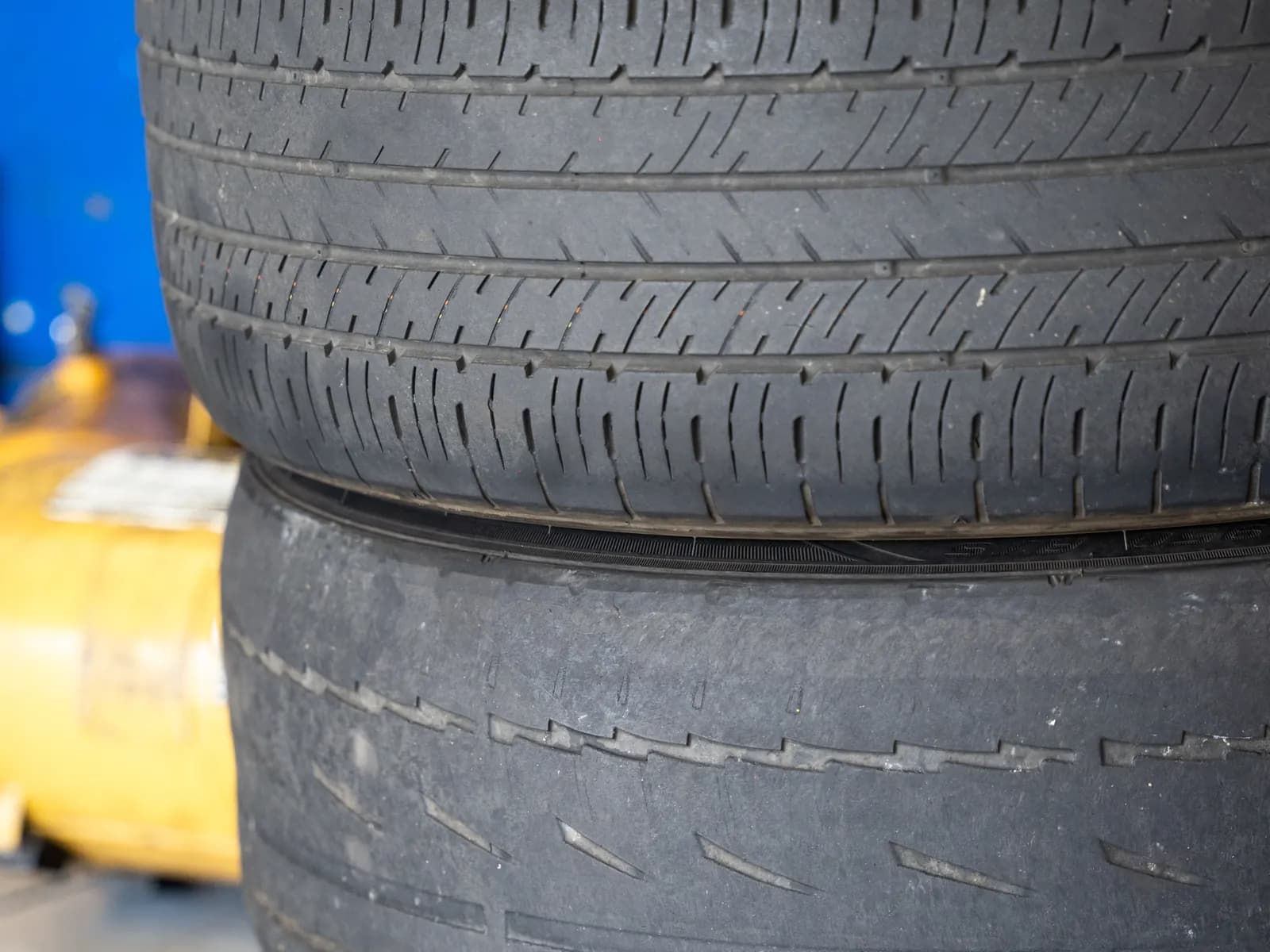
What every part of a tire size like 225/65R17 102H means: width, aspect ratio, wheel size, load index, speed rating and the DOT date code.