
GUIDE / Buying tires
Buying new tires: what to expect at the shop
Kwik Tire, Montclair · Updated · 5 min read
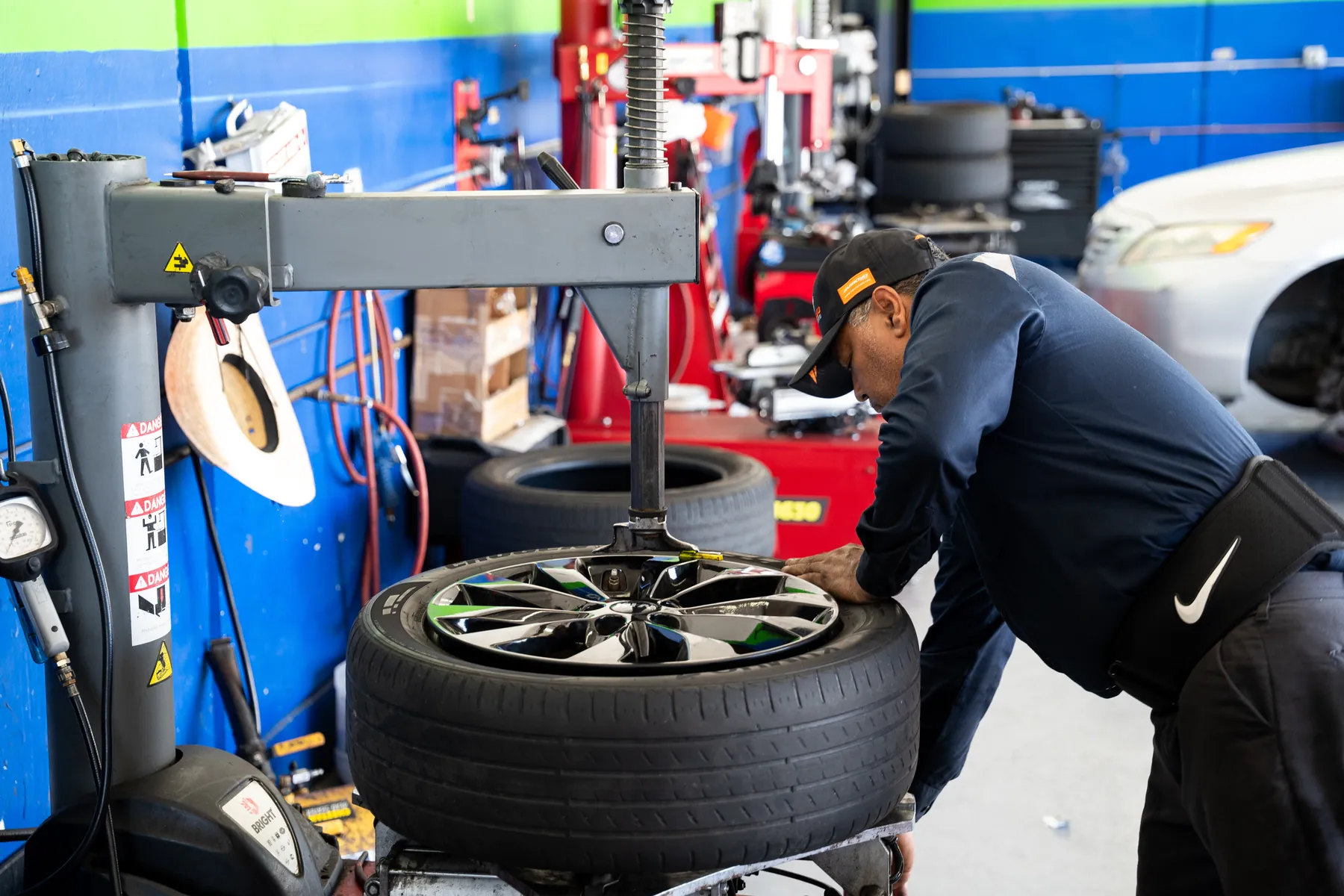
A proper new tire install covers confirming the right size, mounting each tire, servicing the TPMS valve parts, balancing, torquing the lug nuts to your vehicle's spec and setting pressures to the door placard. Plan on an alignment check too, and drive gently for the first 500 miles while the tires break in.
Buying tires should be simple. You pick a set, they go on, you drive away. But a lot happens between the counter and the car, and the steps that get skipped are the ones you find out about later: a vibration, a slow leak at the valve, a TPMS light, a lug nut nobody can get off at the roadside. Here's what a proper install looks like, step by step, so you know what you're paying for.
1. The right size and the right tire
It starts with your door placard, not the tires on the car now. Those might be the wrong size if a previous owner changed them. The placard gives the original size and pressures, and the owner's manual covers load and speed rating requirements. A replacement should match the original size or an approved option, carry at least the original load capacity, and have the same or higher speed rating if the vehicle specifies one.
Then comes the type and model, which depends on how and where you drive. Our guide to choosing tires for SoCal driving walks through it. If you're replacing fewer than four, ask about matching. New tires go on the rear axle when you replace a pair, and AWD vehicles have stricter rules.
2. Old tires off, wheels checked
The old tires come off on a tire machine. That's the moment to look at the wheels themselves: bent lips, cracks, and corrosion that can cause slow leaks. A damaged wheel can also make a tire meet the road unevenly. We don't repair wheels, but we'll show you what we see, and we sell replacement wheels if one is beyond use.
3. TPMS service
If your car has direct TPMS, there's a sensor inside each wheel, usually built onto the valve stem. Its rubber grommets, valve core, nut and cap wear out. Service kits replace them, and industry guidance is to install a fresh kit every time a tire comes off the wheel, because a grommet that's been torqued once takes the shape of the wheel and can leak if reused. A sensor that's failing or damaged gets replaced and programmed for your vehicle. Read more in what the TPMS light means.
4. Mounting
The new tire goes onto the wheel with the beads lubricated so they seat without damage, then it's inflated until the beads seat evenly all the way around. The TPMS sensor needs care here. A careless machine setup can break one. So can a bead pressed against it at the wrong angle.
5. Balancing
Every new tire and wheel assembly gets balanced, because no tire and wheel weighs exactly the same all the way around. The balancer spins the assembly and shows where to place small weights. If a vibration shows up later anyway, road force balancing can find stiff spots and wheel runout that a standard balance can't. Alignment vs. balancing explains the difference.
6. Torque, not hammering
Wheels go back on and the lug nuts get tightened to your vehicle's torque spec, in a star pattern so the wheel seats evenly. Running them on with an impact gun at full power can damage studs and leave nuts you can't remove with the jack-kit wrench on the side of the road. Under-tightening can let a wheel work loose. If you're getting new wheels, ask whether the wheel maker recommends a torque recheck after the first stretch of driving.
7. Pressures set to the placard
Every tire gets set to the cold pressure on your door placard, not the maximum on the sidewall. Fronts and rears may differ. Ask for the spare to be checked while you're there. If your car needs a TPMS relearn after new sensors or a position change, it happens now, so you don't leave with a light on.
8. The alignment question
New tires wear according to whatever the alignment is today. If toe is off, brand-new tread starts wearing unevenly from the first mile. That's why an alignment check is the standard recommendation with new tires, especially if the old set wore unevenly. If the readings are in spec, you've confirmed it. If they aren't, an alignment protects what you just bought. Your call.
9. Registration and paperwork
Ask for a receipt that lists the DOT codes of your new tires. Those codes are how tire makers identify tires in a recall, and the industry recommends registering new tires with the manufacturer so you can be reached if one happens. USTMA member tire makers offer online registration forms.
The first 500 miles
New tires need a short break-in. A release lubricant is used to get tires out of their molds, and it stays on the tread until it wears off, reducing traction until then. Continental recommends easy, gentle driving for the first 500 miles: smooth acceleration, braking and cornering, moderate speeds, and extra following distance. Mounting lubricant can also let a tire slip on the rim under hard acceleration or braking in the first few hundred miles.
New tread is deep and flexes more, so steering can feel a little softer at first. That's normal. Your old tires were nearly worn out, and worn tires respond quicker because there's less tread to flex. After a few days, recheck pressures cold, then make it a monthly habit.
Tires bought online
That's fine. Book mount and balance, tell us the tire size and how many you're bringing, and bring them in. You get the same install steps above: TPMS service, mounting, balancing, torque and pressures. Check the DOT dates when the tires arrive, too. A tire that's been sitting for years has already used up part of its life.
Ready to buy? Search sizes on our tire page, or call (909) 321-2191 with your year, make and model. Want a straight answer first on whether you need tires at all? Book a tire inspection at our Montclair shop, and we'll tell you what we see.
Want a second set of eyes? Book mount and balance.
Book online in a minute, or call (909) 321-2191. 5483 Moreno Street, Montclair.
More questions
Do I need an alignment with new tires?
It's recommended, because new tires wear according to whatever angles the car has now. If the check shows everything in spec, you don't need the adjustment.
Should I replace my TPMS sensors when I buy new tires?
Not always. Working sensors can stay with new service-kit parts, but a failing or damaged sensor should be replaced while the tire is already off the wheel.
Why do my new tires feel different from my old ones?
New tread is deeper and flexes more than worn tread, and a release agent from manufacturing stays on the surface for a while. Drive gently for the first 500 miles while they break in.
Will you install tires I bought somewhere else?
Yes. Book mount and balance and tell us the size and how many tires you're bringing.
Keep reading
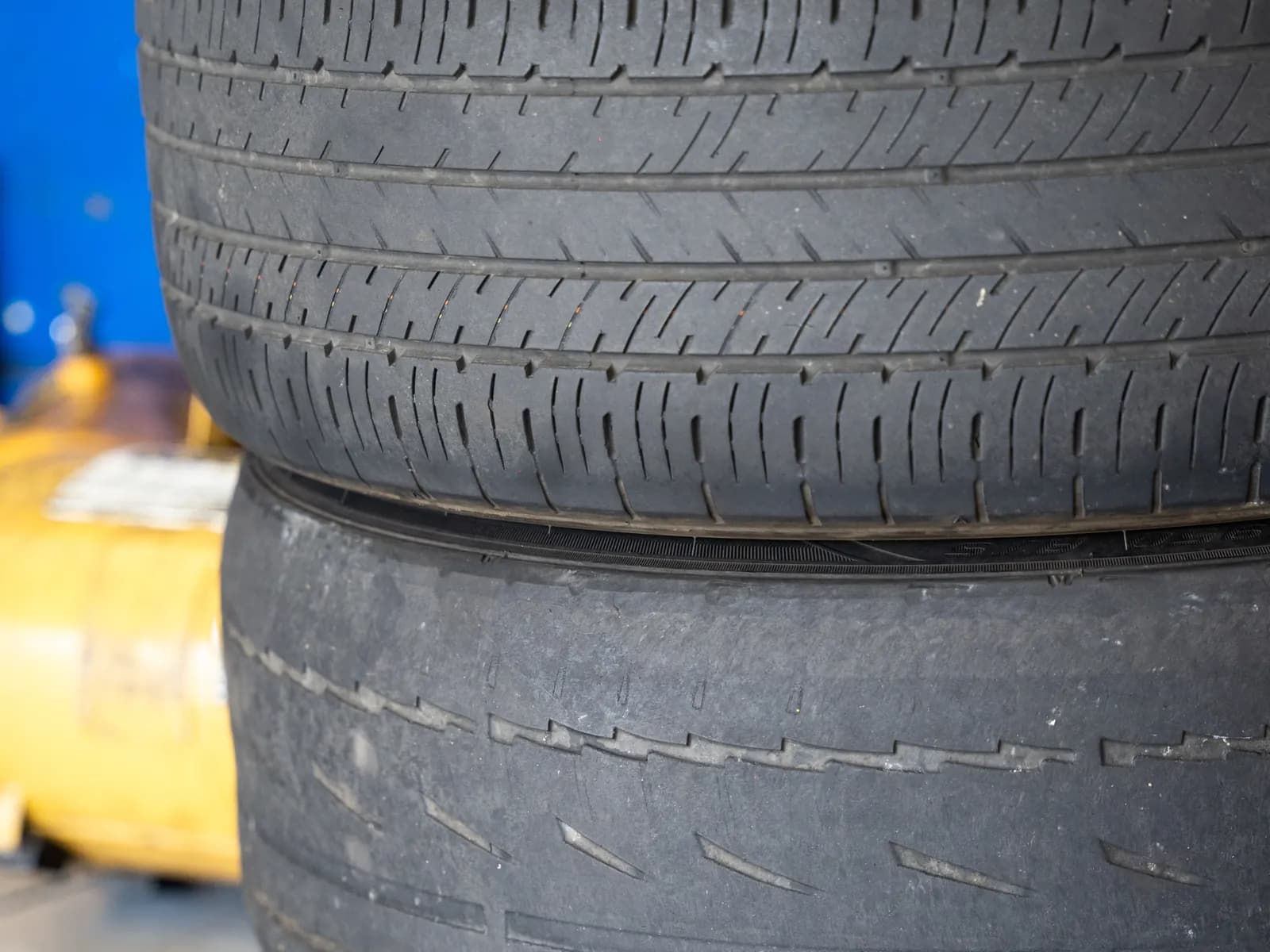
6 MIN / Buying tires
How to read a tire size
What every part of a tire size like 225/65R17 102H means: width, aspect ratio, wheel size, load index, speed rating and the DOT date code.
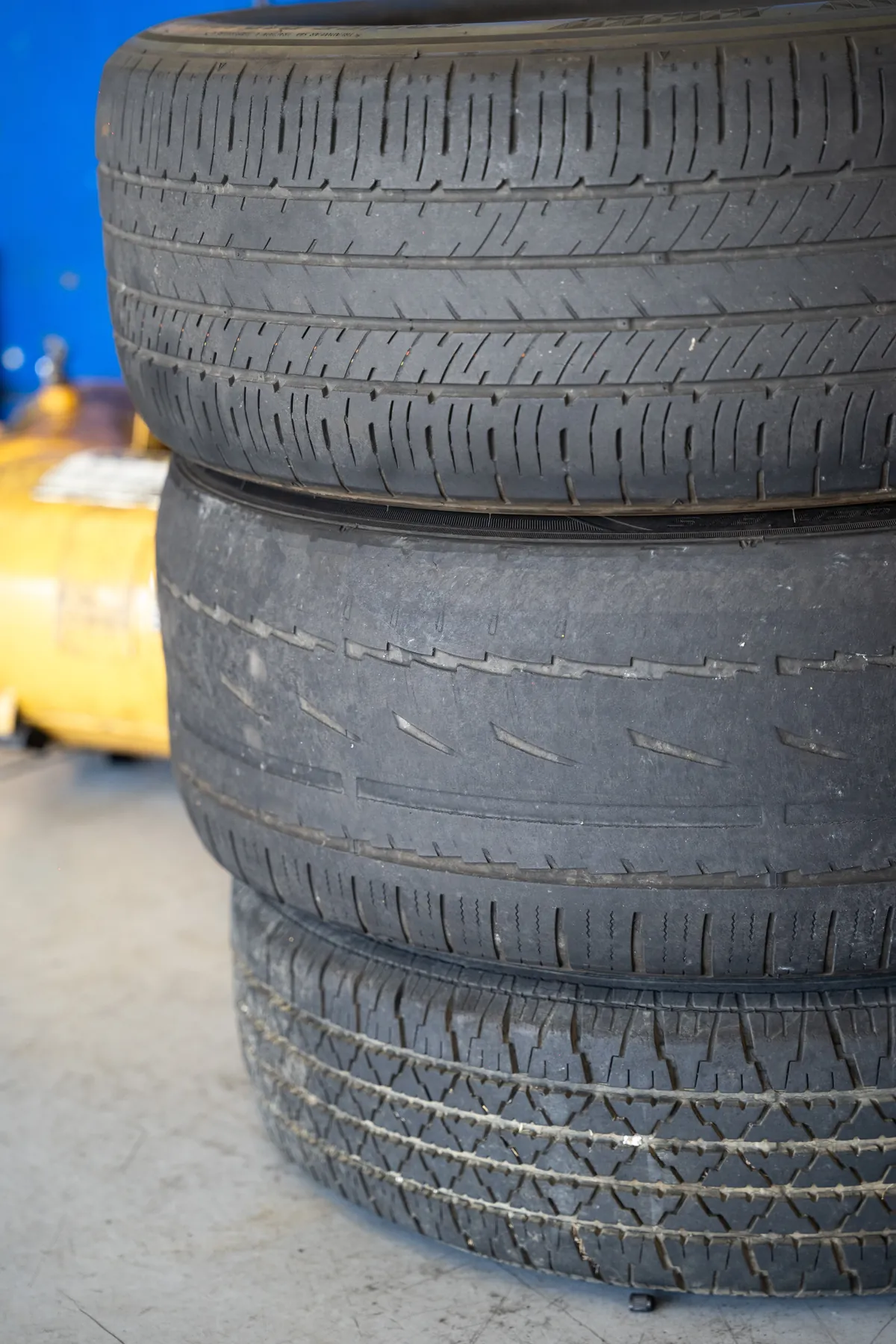
5 MIN / Buying tires
Used take-off tires: what to check before you buy
What take-off tires are, how to check a used tire's age, tread, repairs and damage, matching it across an axle, and when buying new makes more sense.

6 MIN / Buying tires
Choosing tires for Southern California driving
All-season, highway, all-terrain, performance or winter: matching tire type to Inland Empire commutes, summer heat, rare but slick rain and mountain trips.